FEBRUARY PARK E-VENTURES
MISSION BLUE ENJOYS SOME FLITTING FAMEMore than 30 federally-listed threatened or endangered species and more than 80 rare or special-status species call the Golden Gate National Recreation Area home. Notable residents of the Golden Gate National Parks include the San Francisco garter snake, northern spotted owl, California sea otter, coho salmon, mission blue butterfly, and Franciscan manzanita. Each of these species needs our help in their fight for survival. In hopes of encouraging their conservation, we are honoring a different “Species of the Year” each year beginning in 2011. To read more about the mission blue butterfly and its host plant, the silver lupine, click here. SUMMER CAMP EARLY-BIRD REGISTRATION AND OPEN HOUSE
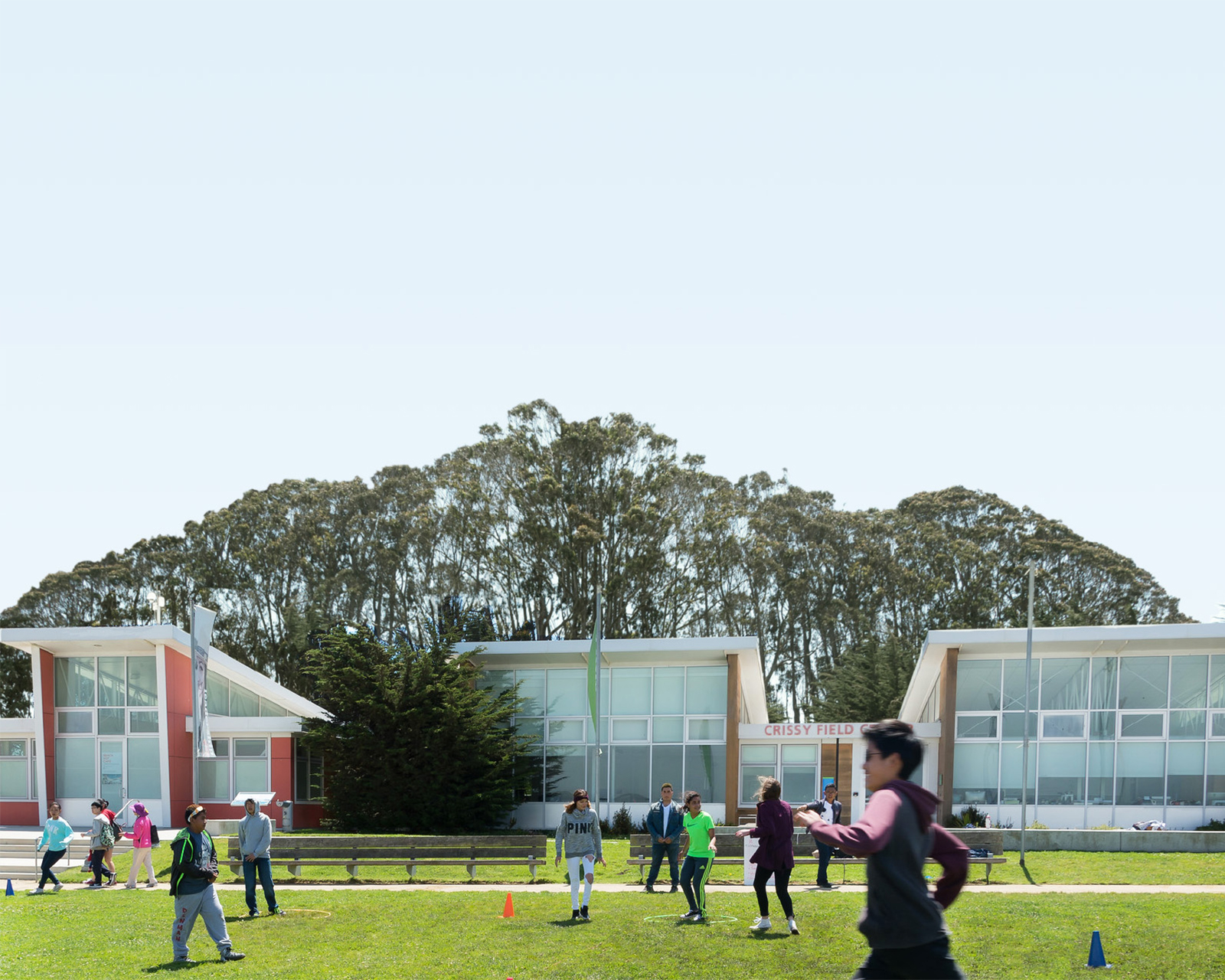
That’s right! The Crissy Field Center will be holding early-bird registration for Summer Camp at the open house. Registration officially opens online on February 28, but take advantage of this special opportunity from noon to 2 pm on February 5 to secure your spot before it’s gone. Summer Camp staff will be there to meet and greet, walk you through registration, and answer all of your tough questions. Open house attendees will also get a chance to participate in an activity—giving them a special preview of what’s in store during the summer programs. Camp staff will be taking open house attendees down to the marsh to do a “mud grab,” which includes a brief presentation about the Crissy Field Marsh, high tide, low tide, native plants, and animals. Attendees will also get the opportunity to examine the mud with microscopes in the Center’s science lab! SUMMER CAMP PROGRAMS: SEASIDE SLEUTHS (GRADES 1–2) Are wings more your thing? This program is all about flying birds, daredevil pilots, buzzing insects, and navigating bats. Students will get to make their own winged costume and flying contraption to test out on the historic airfield. ARCHI-TECHIES (GRADES 3–5) Students design their own sustainable 3-D city, learn about animal architecture, and make a bridge from recycled materials. ENVIROMANIACS (GRADES 3–5) Campers get to make smoothies, go on a parkwide scavenger hunt, create wacky videos, and conduct mad science experiments. JUNIOR RANGERS ON PATROL (GRADES 4–6) This is a chance to be a “park ranger in training!” This program includes visiting a park site every day, learning wilderness skills, camping overnight at Rob Hill, and getting sworn in as official Junior Rangers. COUNSELOR IN TRAINING (GRADES 9–12) The CIT program gives young people valuable job skills so that they can lead and mentor children—and become environmental leaders. Beyond our core Summer Camp program, this year, we will be expanding our extended-care program by adding morning sessions to our afternoons. For $15 a day, summer fun can start as early as 7:30 am with our “Early Birds” morning care option. But don’t worry parents, our usual afternoon extended-care program, “Afternoon Raccoons,” will still be running from 4 to 5:30 pm. Combine Early Bird and Afternoon Raccoon programs for $25 a day for complete extended-care coverage. Finally, if you’re looking to add some tax-deductible love and care, donate to our scholarship program and help an underserved San Francisco youth get the opportunity to have a fun and educational summer with their peers. Forty percent of our campers receive full or partial scholarships, so we are always looking for individuals to support our “campership” program. Summer Camp will fill up fast, be a part of the Crissy Field Center family, and enjoy the national park in your back yard. LOVE IS IN THE AIR AT GGRO
Mike’s sister Kendra, who had been a GGRO volunteer since 1998, introduced him to the organization when he moved back to the Bay Area in 2003. “My family has been into birds and birdwatching for many years, so I’d been a birder for 25 years at that point,” Mike says. Mike inspired his friend Jenn to get involved as well, and she began volunteering with the GGRO in 2005. In short order, both Jenn and Mike found themselves spending more and more time on GGRO activities. “It amazes me when I start to think of the number of hours all these long term volunteers have,” Jenn says. “For banding and hawkwatch, it’s a full day every time you go out—from six hours to more than 10.” In addition to their volunteer duties banding hawks, they took on more responsibility with the GGRO. Mike, who works in a veterinary office, participates in conducting field evaluations of other GGRO volunteers, a process that ensures that everyone is trained correctly and that the GGRO collects accurate data for its scientific research. Jenn, a city planner for Palo Alto, helps take charge of minding and fixing the nets they use for catching the birds that they band. Over the course of the last eight years, the two combined to contribute 2,500 hours of their time to the GGRO. Along the way, they fell in love with the organization—and each other. Mike proposed to Jenn in September 2008—while they were banding hawks. On the fateful day, Mike arranged with Siobhan, the day leader, to arrange things so he and Jenn would be alone in a blind. He said that Siobahn guessed immediately what he was up to, but it took some finagling and chicanery on her part to make it happen. “In the morning before we go out on the hill, the day leader assigns people to the four different blinds,” Mike explains. “She told people we’d be at Hill 88 and that someone else was going to be coming late because he had to pick his son up from soccer, so it didn’t look suspicious. Then she faked a cell phone call to herself, answered it, and said the other volunteer couldn’t make it after all because his son was sick. She called us on the radio to tell us this, but she was really telling everyone else.” “I was totally oblivious,” Jenn says. “I was very nervous,” Mike says. “My heart was beating very quickly!” The proposal took place at 11:30 am, with the second hawk the pair caught that day. Jenn had caught and banded the first bird. “Mike banded the second bird, and I was looking out of the front of the blind keeping an eye on things while he was in the back doing the measurements,” Jenn recalls. “He came around and asked, ‘Jenn, can you check the size of this band for me?’ [For most people] this was not unusual—we often confirm because you want to make sure it’s not too big or small—but for Mike it’s unusual. So I turn around, and he’s sitting there with a sharp-shinned hawk on his lap, and not only did it have the normal band, but it also had a diamond ring. I kind of did a double take. And then I said ‘Yes.’” “And then I was distracted by the sun reflecting off it for the rest of the day,” Jenn adds. “Throughout the day, Siobhan kept making comments over the radio, like ‘What time do you want to pack up today? Five o’clock has a nice RING to it,’” Mike says. She also expressed concern about whether the pair had caught a bird small enough to fit the ring onto.
Their love for the GGRO—and raptors in general—was a theme up to and through their wedding day. Leading up to the big day, Jenn and Mike created a “personal fundraising page” on the Parks Conservancy website to raise money for the GGRO in lieu of wedding gifts. And on August 1, 2010, Mike and Jenn were married in a grove of redwood trees in the Santa Cruz area. Of course, raptors played a big role in their wedding ceremony as well. Siobhan, who does technical drawings for bird books, created the artistic renderings of raptors on the wedding invitations. And instead of a typical ring bearer, when the officiant said, “May I have the rings?,” a Harris’s hawk came flying over the crowd to deliver a black bag with the rings inside. Mike and Jenn are excited to spend their married lives sharing their many interests—photography, birdwatching, and continuing to volunteer at the GGRO. In fact, Mike took a sabbatical this past fall that allowed him even more time to volunteer—and his GGRO work became, in essence, a part-time job. He was on Hawk Hill twice a week each week during migration season—seeing and studying a great variety of raptor species at different ages. His valuable experience was a key factor in being nominated as a day leader for the GGRO. “We both really enjoy the program,” Jenn says. “Everybody in it is a really amazing person—not just the staff but the volunteers as well. One of the things I find amazing about it is the longevity of the volunteers. We have some people who have been there for 25 years. It’s a great community.” Mike adds, “Even the days that we don’t have any luck catching hawks, we have fun because we're working with good people and a good organization.” And a good way, it turns out, to find your mating pair. GOOD FOOD—COMING TO A NATIONAL PARK NEAR YOU
Ever wonder where your food comes from when you dine at a café or restaurant in a national park? The Institute at the Golden Gate has been working on an initiative called Food for the Parks to bring park leaders and concessioners together to offer more sustainable, organic, fair-trade, and local food and beverage options to national park visitors. “There’s no question that Golden Gate National Parks is showing the way,” says Bill McKibben, author, educator, and founder of 350.org. THE PERFECT PAIR: OUR SPECIES OF THE YEAR AND ITS HOST PLANT
The habitat in which the mission blue thrives can be found in the dotted coastal grasslands of the Golden Gate National Parks. Here you’ll find the butterfly’s perfectly matched host plant: the silver lupine (Lupinus albifrons). Though there are 82 species of Lupinus in California, the mission blue can only find what it needs from the silver lupine—and maybe the summer lupine (Lupinus formosus) and varicolor lupine (Lupinus variicolor) if the silver lupine isn’t available. The silver lupine provides the perfect place for the butterfly to lay its eggs, provides tasty leaves for the larvae to munch on, and also provides a protected place for pupation (in the duff at the base of the plant). With such a specialized niche, it’s not hard to understand why the mission blue is endangered. Its life cycle depends on the availability of silver lupine! Unfortunately, many factors presently affect the silver lupine population in the Bay Area, including: habitat loss due to urban and agricultural expansion, invasion of exotic plant species, and a recently found pathogen that causes “damping off” (a disease caused by a fungus that commonly happens because of too much moisture) of young plants—just to name a few. Current restoration efforts in the Golden Gate National Parks are focused on removing invasive species in an effort to build up the native silver lupine population. The park nurseries also try to grow the lupine from seed for outplanting in the field. However, along with the difficulties faced in the field, the nurseries have had many challenges in trying to grow the host plant in a nursery setting. To successfully grow Lupinus albifrons from seed, a pre-germination treatment must be applied to mimic what the seed might have naturally experienced in the wild. In their native coastal grassland habitat, the silver bush lupine seeds experience fires, wind, or interactions with native fauna that help scratch the thick seed coat to allow water in, which, in turn, triggers the germination process. The nursery staff imitates these interactions by immersing the seeds in boiling water, rubbing the seeds with sand paper, or delicately nicking the seed coat with a sharp blade. Even if the seed receives just the right treatment and can successfully germinate, then the challenges of nurturing the seedling come into play. As young plants are prone to invasion by pathogens, nursery staff must sterilize the soil before transplanting seedlings into it and take care not to over-water (creating a perfect environment for the pathogen). Rodent predation on seedlings can also be an issue in a nursery setting, so planting containers are placed in wire cages for protection. All these difficulties, though they can be frustrating, are met with energy and know-how from the Conservancy restoration teams and nurseries staff. So, the next time you are out for a hike in the parks or volunteering to plant at one of our restoration sites, look for the beautiful Lupinus albifrons, with its whirled palmate leaves and spike of beautiful violet flowers. And remember that it provides a specialized home for the majestic mission blue—our Species of the Year! They make a truly perfect pair. PARK PIC OF THE MONTH: TOP 5 SUNSET SPOTS
Searching for the picture-perfect spot to watch the sunset with your sweetheart this Valentine's Day? Look no further than our list of Top 5 Sunsets in the Parks! BUTTERFLY DATA GIVE SPIRITS A LIFTPrice Sheppy, Park Stewardship Community Programs Manager
I have just come back from removing invasive scotch broom from around mission blue butterfly habitat at Milagra Ridge. I’m exhausted and wondering if I am really doing any good in the park. I express my thoughts to a co-worker, who has spent the last three months compiling and analyzing monitoring data for the mission blue butterfly which explains why I haven’t seen her. She was just finishing up her work so I sat down to warm up with a cup of hot cocoa. Our conversation quickly turned to what she had discovered. GET TO KNOW OUR COMMITTED CREW OF NATIONAL PARK SERVICE STAFFName: Mike Coffey
HEART YOUR PARKS FOR VALENTINE’S DAY!Looking for a different way to celebrate Valentine’s Day this year?
|
Resources
|


