Op-Ed: Welcome to Valkatraz—How Alcatraz Became Part of the Valkyries' Story

Kelly Sullivan / Parks Conservancy

Kelly Sullivan / Parks Conservancy

Kelly Sullivan / Parks Conservancy

Kelly Sullivan / Parks Conservancy

Kelly Sullivan / Parks Conservancy

Kelly Sullivan / Parks Conservancy

Kelly Sullivan / Parks Conservancy

Kelly Sullivan / Parks Conservancy

Kelly Sullivan / Parks Conservancy

Kelly Sullivan / Parks Conservancy

Kelly Sullivan / Parks Conservancy

Kelly Sullivan / Parks Conservancy

Kelly Sullivan / Parks Conservancy

Kelly Sullivan / Parks Conservancy

Kelly Sullivan / Parks Conservancy

Kelly Sullivan / Parks Conservancy

Kelly Sullivan / Parks Conservancy

Kelly Sullivan / Parks Conservancy

Kelly Sullivan / Parks Conservancy
Kelly Sullivan / Parks Conservancy
Kelly Sullivan / Parks Conservancy
Kelly Sullivan / Parks Conservancy
Kelly Sullivan / Parks Conservancy
Kelly Sullivan / Parks Conservancy
Kelly Sullivan / Parks Conservancy
Kelly Sullivan / Parks Conservancy
Kelly Sullivan / Parks Conservancy
Kelly Sullivan / Parks Conservancy
Kelly Sullivan / Parks Conservancy
Kelly Sullivan / Parks Conservancy
Kelly Sullivan / Parks Conservancy
Kelly Sullivan / Parks Conservancy
Kelly Sullivan / Parks Conservancy
Kelly Sullivan / Parks Conservancy
Kelly Sullivan / Parks Conservancy
Kelly Sullivan / Parks Conservancy
Kelly Sullivan / Parks Conservancy
Kelly Sullivan / Parks Conservancy
Note: This Op-Ed was originally published in the San Francisco Chronicle on Sept. 23, 2026.
As the Golden State Valkyries head into the playoffs, fans have a new name for the ferocious defense that has become one of the team’s signatures. They call it Valkatraz.
I smile every time I hear it because I know there's a story behind that name.
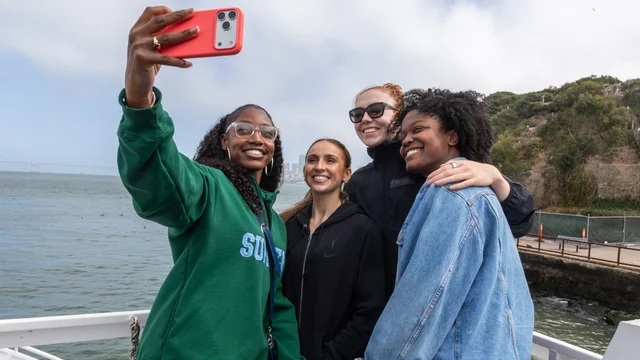
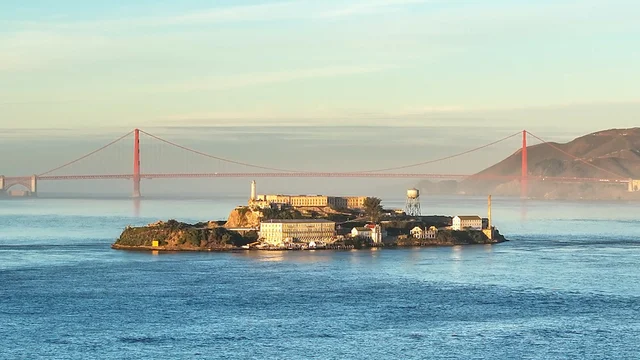
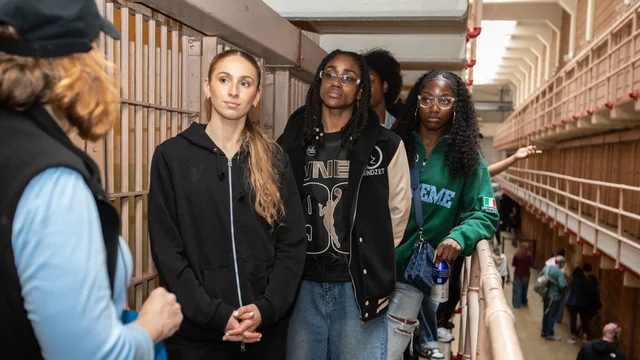
Earlier this summer, Tiffany “Tip” Hayes and her teammates boarded a ferry for Alcatraz Island for a custom tour of one of the Bay Area's most iconic national park sites. Tip had been talking about bringing her teammates to the island for more than a year. They came to experience Alcatraz and its history. What none of us could have predicted was how the experience would follow them back across the Bay.
“Valkatraz” took on a life of its own, becoming a nickname for the team's terrifying defense and another piece of the identity this remarkable team is building in the Bay Area.
The connection is hard to miss. Alcatraz was once known as one of the country's most formidable federal penitentiaries, and the Valkyries have built a reputation for their own kind of lockdown, pressuring opponents so much they fear the turnovers, missed shots, and steals they face in Ballhalla.
They've led the WNBA in defensive rating and points allowed per game, making “Valkatraz” a fitting nickname for the league's toughest defense.
While “Valkatraz” is a clever name, what interests me most is how naturally a place with so much history became part of something entirely new.
Alcatraz is one of the most recognizable places in the world. More than 1.4 million people cross San Francisco Bay to visit the island each year, many arriving with a story already in their heads. They know about the federal penitentiary, Al Capone and the famous escape attempts. They've seen the movies.
Those stories are part of Alcatraz, but not the whole story.
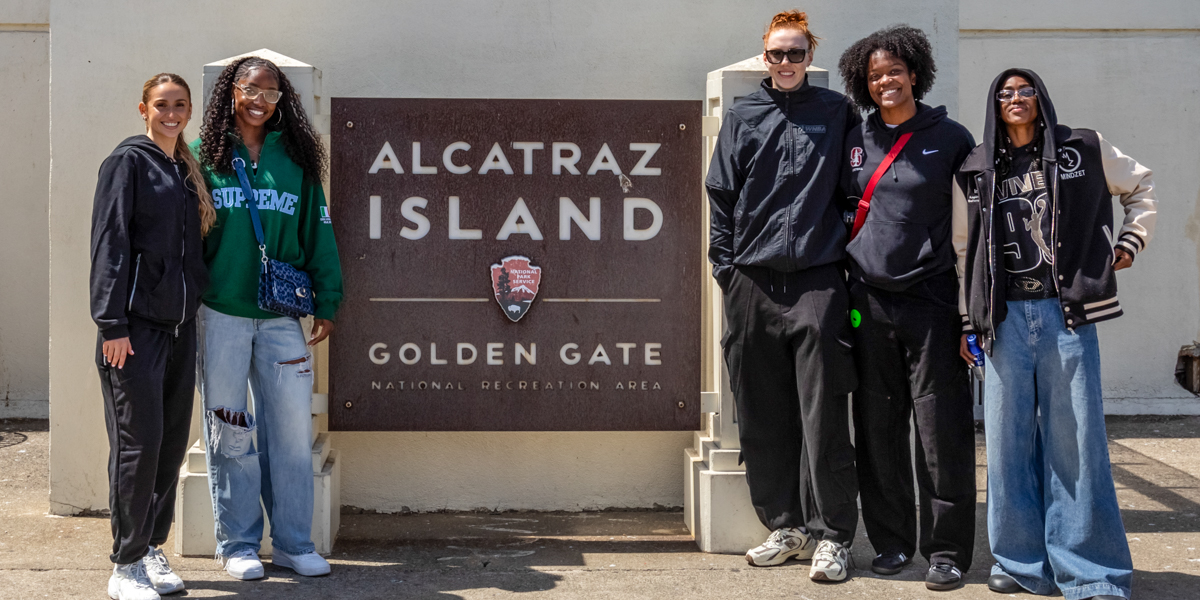
On their custom tour, today's Valkyries players learned about the 19-month Occupation of Alcatraz by the Indians of All Tribes in 1969, which helped ignite the modern American Indian civil rights movement. They heard about the incarcerated people who played sports in the rec yard and helped tend the gardens around the island, among their only opportunities to be outdoors.
They talked about the modern-day program to bring formerly incarcerated people to the island, sharing their personal experiences and invite visitors to think about incarceration, justice and our shared humanity.
Alcatraz has always been a place where the past meets the present.
Sports have been part of that story longer than many people realize.
Nearly 70 years before the Valkyries' visit, Bill Russell and K.C. Jones visited Alcatraz after leading the University of San Francisco to back-to-back national championships. People incarcerated on the island had followed the Dons through radio broadcasts and the sports pages, and the players were welcomed as stars.
It's hard to look at that visit now without thinking about who Russell would become. He was one of the greatest basketball players of all time, and his impact reached far beyond the court. He challenged racism, marched for civil rights and became one of the most consequential athlete voices for social justice in American history.
There's something powerful about knowing a young Bill Russell once walked through this iconic national park site, decades before another Bay Area basketball team would make the island part of its own story.
That connection between Alcatraz and the world around it continues in ways both significant and unexpected.
Earlier this year, NBC made history by broadcasting portions of its Super Bowl LX pregame show live from Alcatraz, the first live broadcast of its kind from the island. Millions of viewers were introduced not only to the familiar cellhouse, but to the island's military history, the Native American Occupation and the natural resources that make Alcatraz part of a much larger public lands story.
Alcatraz is a vital gateway for San Francisco and the national parks that define the Bay Area, places like Crissy Field, Lands End, Mori Point, and the Marin Headlands. The Golden Gate National Recreation Area (GGNRA) contributes more than $2 billion in annual economic impact to the region, according to the National Park Service, and the GGNRA remains one of the most-visited national park units in the country, with more than 16 million visitors in 2025.
These beloved public lands cannot only be about looking backward. Preserving Alcatraz means protecting its history and natural resources, and it also means keeping this iconic place relevant and accessible to the generations experiencing it now, and for those to come.
So today, there's Valkatraz.
As the Valkyries begin another playoff run, I'll be cheering along with the rest of the Bay Area. And when I hear “Valkatraz,” I'll think about much more than an amazing defense.
The Valkyries came to Alcatraz to experience its story. Then they made it part of theirs.
And somewhere along the way, an old place became part of a new story.
That's exactly what I hope our national parks and public lands will always have the power to do.