State of the Parks 2026: Partnership Keeps the Golden Gate National Recreation Area Strong

Alison Taggart-Barone
Note: This Op-Ed was originally published in the San Francisco Chronicle on March 25, 2026.
National parks are at an inflection point. Staffing reductions, deferred maintenance, and shifting federal priorities are creating strain across a system already managing record visitation and aging infrastructure.
The recent federal government shutdown, the longest in history, was a warning across the country and here in the Bay Area, where national parks support thousands of jobs and contribute $2 billion annually to the local economy. Parks don't disappear in dramatic moments. They erode quietly when gaps in care widen and uncertainty grows.
The question now: Will we choose to stand with parks?
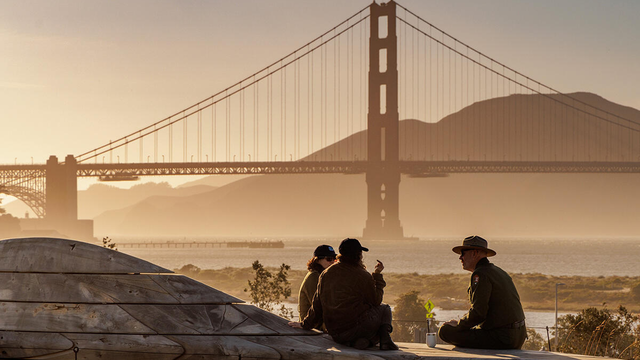
The Golden Gate National Recreation Area (GGNRA) offers a clear model of what sustained commitment can achieve. More people visit the GGNRA each year than any other national park site in the country, with 19 million visitors in 2024. Iconic park sites like Muir Woods, Alcatraz, the Presidio, and Mori Point are woven into daily life of the Bay Area and serve as places where nature, history, and community meet.
Partnership makes this possible. The GGNRA exists in its current form thanks to a long-standing collaboration among the National Park Service (NPS), the Presidio Trust, and the nonprofit Golden Gate National Parks Conservancy. This tri-organization, public/nonprofit model is the reason these public lands can adapt and evolve while staying open and accessible to everyone.
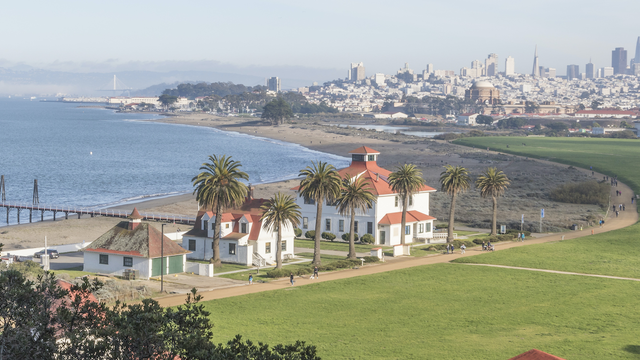
This year offers a powerful example of possibility through partnership. We're celebrating the 25th anniversary of Crissy Field's transformation from post to park, made possible through the leadership of the NPS, the dedication of volunteers, and the generosity of the Evelyn and Walter Haas, Jr. Fund.
Crissy Field was once the site of a natural salt marsh utilized by Indigenous people for harvesting fish, and became a strategic military airfield named Crissy Field, but 25 years ago it was a broken concrete parking lot. Today, it's a place where people and nature take flight together, birds sweep across the restored marsh, and families gather in the shadow of the Golden Gate Bridge. At the Crissy Field Center, young people build confidence, discover their potential, and find a sense of belonging through outdoor learning and leadership programs. Crissy Field shows what can happen when a shared vision is matched with sustained commitment.
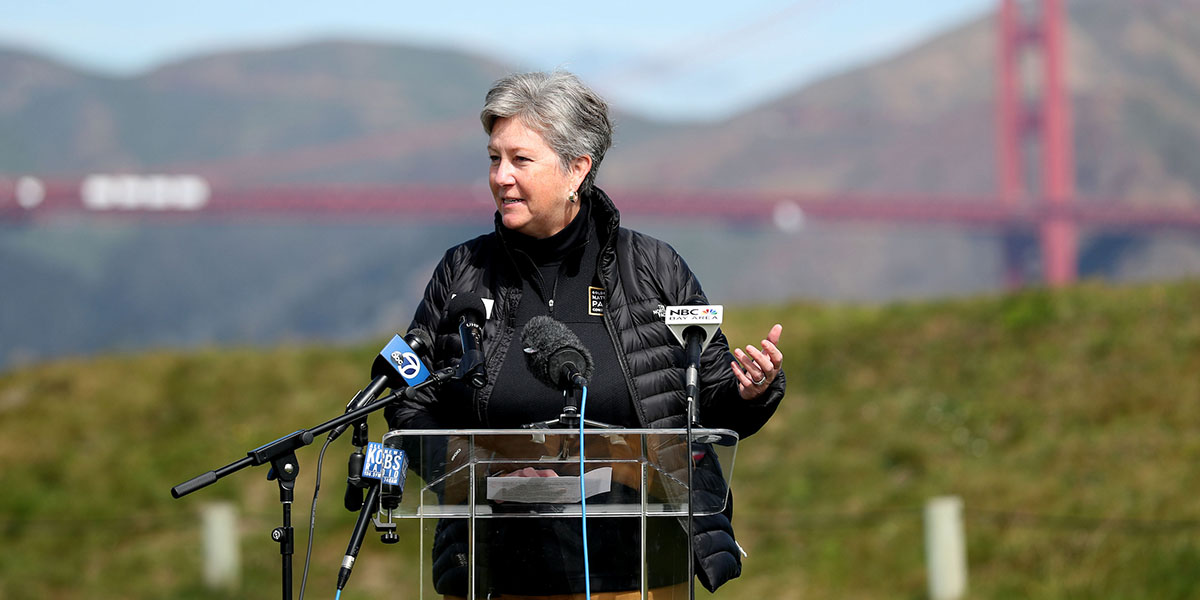
Jed Jacobsohn / Parks Conservancy
Similar work continues throughout the GGNRA. NPS protects these places as part of our shared national heritage, and our work together is showing up in tangible ways. At Hawk Hill, trail and visitor improvements are protecting sensitive habitat while improving the experience for everyone. At China Beach, revitalization is restoring access to a historic coastal landscape. Along the San Francisco waterfront, we're improving the gateway at Pier 31 for Alcatraz visitors, city neighbors, and people strolling the Embarcadero.
Within the Presidio, the Presidio Trust is bringing historic buildings back to life, restoring green space, and improving park access by upgrading roads and bike lanes. At Presidio Tunnel Tops, the Mess Hall will expand food offerings at a site that has already welcomed nearly 6 million visits since 2022.
The Parks Conservancy strengthens this work through philanthropy, education, and community partnerships that connect people directly to the GGNRA.
These projects show what partnership can achieve, but today's pressures remain real. National parks operate like small cities and rely on functioning power systems, roads, wastewater infrastructure, and emergency services. When these systems are disrupted, the impacts reach far beyond park boundaries.
Federal shutdowns are one of the clearest examples of this vulnerability. During the 2025 shutdown, Alcatraz Island closed for a single day before emergency funding through the Parks Conservancy and our partners allowed operations to resume. Around 1.5 million people visit Alcatraz every year, many expecting to learn about Al Capone and famous escapes, but leaving with reflections on the history of mass incarceration in America. That's the power of national parks: To open minds and change lives. Our temporary support helped maintain access to those powerful experiences, but it's not a sustainable solution.
Funding shortfalls that impact national parks are becoming more frequent, and the disruptions they cause will only grow. We can't keep plugging gaps when they arise. Our parks and the communities that rely on them need sustainable, long-term solutions.
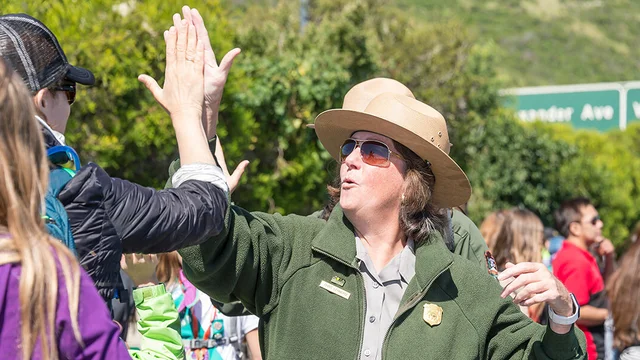
The path forward remains grounded in the same principle that has carried the GGNRA for decades: partnership. The strength of these parklands has never rested on a single organization. It depends on the people who choose to stand with parks, again and again.
Now is the moment to reaffirm that commitment. Speak up for the parks that shape our daily lives. Call your state and local representatives to advocate for protecting public lands, participate in volunteer programs that improve the parks, and join the members of the Parks Conservancy in supporting these beloved places. When we act together, we reinforce the message that these parks will not be diminished by benign neglect or indifference.
Crissy Field's first 25 years remind us of what's possible when vision is matched with sustained commitment. The state of the parks is rooted in partnership. It has carried these places through past challenges, and it will keep them strong in the years ahead.
If we want strong national parks, here and across the country, the path forward is clear. Partnership is not optional. It is essential.