Tips for winter gardening

Volunteers remove grasses at Black Point Historic Gardens.
Dave Rauenbuehler / NPS
Expert recommendations for your home garden, from our historic gardens team:
- Plant in the winter to take advantage of the natural influx of water in your garden.
- Avoid pruning right before rain to help your plant heal without exposure to pathogens or rot.
- Resist working in the garden on a rainy day—air pockets are a very important part of the recipe for healthy soil and plants, and working in your garden when it's very wet will compact your soil.
- Double check your seedling identification during weeding! Desired plants can look similar to invasive weeds during their seedling stage.
- Keep fallen leaves on the ground. They provide important shelter for butterflies and moths in the winter, and keep the soil insulated and protected through the season.
- See if there's a way to incorporate a rainwater catchment into your garden or divert your gutters into a rain garden.
- Plant native wildflowers and perennials, they're perfectly adapted to our local climate and support our native ecosystems. If you plant them with the winter rains, they'll be strong and need minimal care throughout the rest of the year.
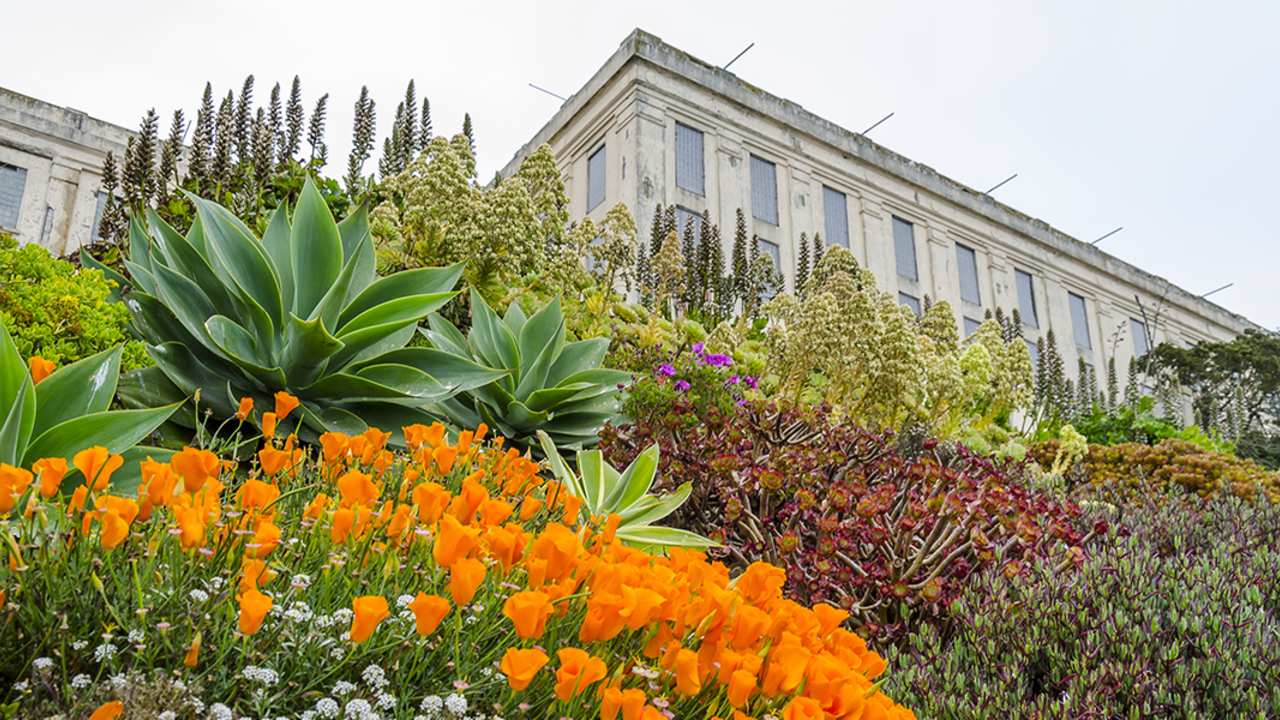
- Some of our favorite native plants for the garden include: Clarkia "Farewell to Spring," Elegant Clarkia, Baby Blue Eyes, Globe Gilia, Ceanothus "Yankee Point," Coyote Mint, California Fuschia, Yarrow, Heuchera maxima, Douglas Iris, and of course California poppy.
- Make notes now of how your garden did this year—what plants did well, what struggled, what you'd like to try for next year.
Alcatraz Island and Black Point at Fort Mason host some of the most spectacular historic gardens in city, thanks to planting and upkeep from expert staff gardeners working alongside wonderful volunteers. No matter the season, Black Point needs extra hands, or you can become a docent on Alcatraz. Check parksconservancy.org/historicgardens25 for the latest info, and we'll see you out there!