First-person: How we're building queer belonging in nature
Dennis Mabasa on what it means to create welcome and belonging at the Crissy Field Center and across the GGNRA

Brittany Hosea-Small / Parks Conservancy
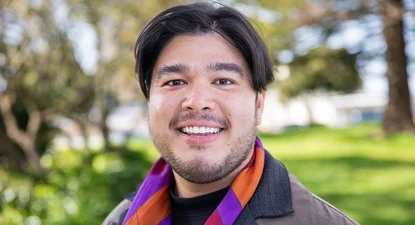
Editor's Note: This opinion piece was first published in the Bay Area Reporter during Pride Month 2026. The Parks Conservancy's Vice President of Community and Youth, Dennis Mabasa, talks about their work across the parks and at the Crissy Field Center, on the 25th anniversary of the Center and the transformation of Crissy Field into a welcoming space for all.
I am an environmental educator and, for more than 20 years, I've had the privilege of watching what happens when people discover that they belong.
Through my work, I’ve seen young people climb mountains they never thought they could climb and discover confidence they didn’t know they possessed. I’ve met former participants who tell me environmental education programs changed the trajectory of their lives. Some say the joy they found in those programs gave them a reason to keep going during some of their darkest moments.
Environmental education is often thought of as learning about plants, animals, ecosystems, and climate. It is all those things. But at its best, it's also about creating opportunities for people to understand their unique place in the world.
For me, the power of belonging became deeply personal in June 2015.
Ryan Curran White / Parks Conservancy
I had recently started a new job at an organization in the Southern United States and was preparing for a weeklong camping trip with a group of young people when a supervisor pulled me aside and said, "Dennis, we love you, but when we meet the parents, tone it down. Remember, this is the South."
They didn't explain what they meant. They didn't have to.
Part of me wanted to quit.
Instead, I stayed.
On the first day of the trip, while driving a van full of teenagers to our first campsite, I heard screaming from the back. I immediately pulled over, thinking something terrible had happened.
Instead I found a group of young people hugging, crying, and cheering. They had heard the Supreme Court ruling in Obergefell v. Hodges, legalizing same-sex marriage nationwide.
The young people in that van were celebrating the possibility that they, their friends, and their family members could be fully recognized and loved.
Before that moment, I was so afraid they wouldn't accept me after that supervisor made that comment.
In that moment, I learned something important. Belonging isn't determined by titles, authority, or power. It's created by people. It's built through culture, community, and small actions that communicate "You are welcome here exactly as you are."
That trip changed me. It helped me realize this lonely queer kid could devote a life to creating spaces where other people would never have to question whether they belonged.
Today, I have the privilege of serving as Vice President of Community and Youth at the Golden Gate National Parks Conservancy. One of the core goals of our work is ensuring these public lands are welcoming and accessible to everyone, particularly communities that have historically been excluded from outdoor spaces and environmental movements.
That commitment feels especially important right now.
Across the country, we’re seeing efforts to erase or minimize the stories of LGBTQIA+ people, particularly transgender people and queer and trans people of color. Pride has always been intersectional, shaped by people whose lives reflect the intersections of race, gender, class, sexuality, and culture.
When those experiences aren't centered, we miss the chance to better understand one another and strengthen community.
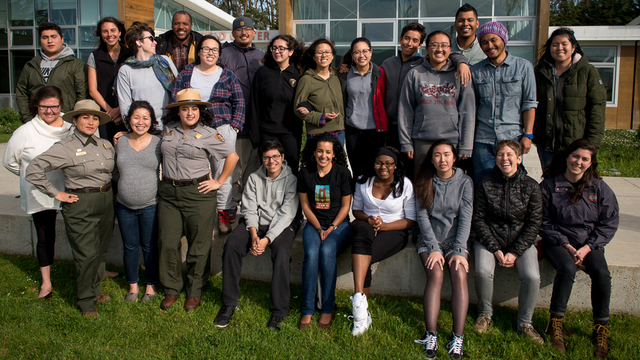
Through programs like the Queer Belonging Backpacking Adventure (QBBA) and our Belonging in Nature: Queer and Trans Community Days, we create opportunities for queer and trans people and allies to experience parks as leaders, stewards, educators, and artists.
QBBA is a paid summer leadership program for high school-aged youth that centers queer, trans, and gender-diverse young people and allies, particularly Black, Indigenous, and youth of color. Participants build outdoor skills through activities like rock climbing, camping, backpacking, hiking, and kayaking, while exploring identity and community. For many, it’s a first experience sleeping under the stars, carrying a backpack through wilderness, or connecting with peers who share similar lived experiences.
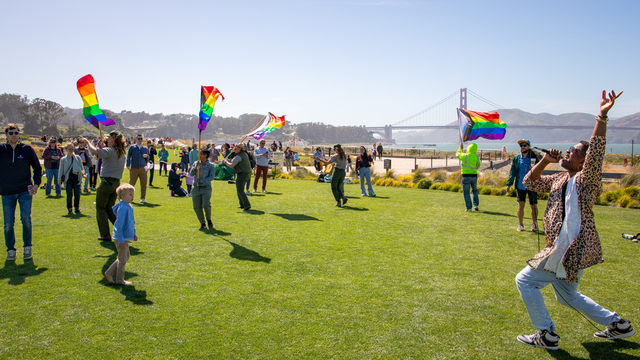
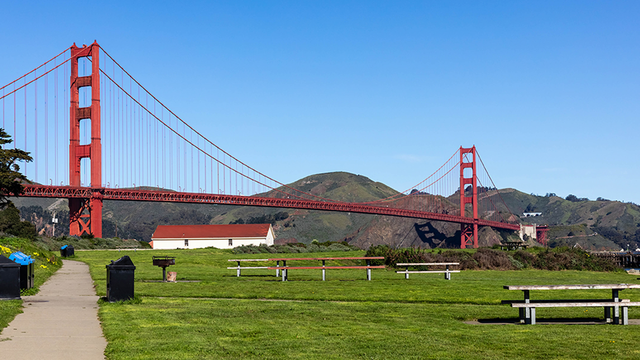
That work is rooted at the Crissy Field Center, a national model of youth environmental education marking its 25th anniversary this year alongside the transformation of Crissy Field itself. Crissy Field was a broken concrete parking lot before its transformation, and today it's a place where people and nature come together. Crissy Field Center programs like QBBA invite young people into this landscape with welcome and belonging, so they can be a part of its future.
And it goes far beyond the boundaries of Crissy Field. Our monthly Belonging in Nature programs invite queer and trans community members and allies of all ages to connect with parks through stewardship, art, and wellness. Participants might restore habitat, learn about native plants, practice meditation, hear from Indigenous and Two-Spirit artists, or share a meal outdoors. These gatherings support care for the land and for one another.
Participants consistently tell us these programs offer space to show up as themselves. They find community, mentorship, healing, and connection. Some pursue careers in conservation and environmental stewardship, while others build a lasting sense of belonging in nature.
That's what Pride means to me.
It's not only a celebration of identity. It's a commitment to creating conditions where people can thrive. It's recognizing that belonging is not something we ask individuals to earn. It's something we build together.
This Pride Month, I invite you—especially LGBTQIA+ communities and allies—to join us. Attend a community program. Volunteer alongside us. Encourage a young person to apply for QBBA next year. Spend time in your parks. And if this work resonates with you, consider supporting it so that more people can experience the healing, connection, and belonging that nature makes possible.
I often think about that young educator sitting in a van in 2015, wondering whether there was space for someone like me in this field. What I learned from those young people that day is something I still carry with me: belonging is something we make together—in vans, on trails, in campsites, in the small and radical acts of seeing each other fully.
That work didn’t begin in that moment, and it doesn’t end here.

Related Products