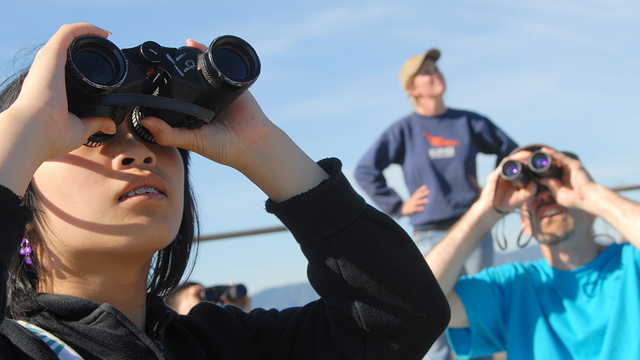
It's the season we fall in love with the national parks of the Bay Area. Sunny days, raptors overhead, and maybe even a yellow leaf or two.
We might not get the same fall foliage as Vermont or New Hampshire, but there's still plenty to do in your coastal parklands every autumn. Best of all, these iconic national park sites are woven into the everyday fabric of the Bay Area—often just a bus, boat, or BART ride away. Check out our Transit to Trails guide for easy ways to reach your next outing by public transportation, no car required. For more on why these "urban gateway" parks matter as everyday spaces for connection and celebration, read this op-ed from our CEO on how national parks are woven into daily Bay Area life.
Here are staff picks for great fall outings in the parks:
For the best fall foliage and autumn leaves, our Native Plant Nursery experts recommend looking for big leaf maples and creek dogwoods in riparian zones (along creeks and rivers). Here are staff selected trails for great autumnal outings in the parks to go leaf-peeping:
Like other deciduous trees, Big Leaf Maple (Acer macrophyllum) is a native show-stopper when its leaves turn bright yellow. It is found along riparian areas.
John Rusk
California Buckeye (Aesculus californica) look like Mother Nature hung ornaments on its bare branches. When the leaves drop, large brown seeds are the only thing left hanging.
Debbie Ballentine
Creek Dogwood (Cornus sericea) can be found in riparian areas. The species makes its presence known as its leaves drop, showcasing bright red branches underneath.
Matt Lavin
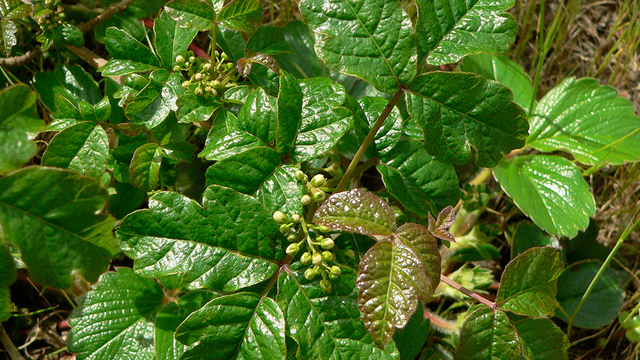
While best viewed from a distance, Poison Oak (Toxicodendron diversilobum) offers reds, purples, oranges, and yellows in the fall. Viewer beware—the plant retains its itch-inducing oils even without its leaves.
Paul Asman & Jill Lenoble
While many other species of oaks in California are deciduous (they lose their leaves), the Coast Live Oak (Quercus agrifolia) is evergreen. Watch as acorns mature (usually from Sept. to Nov.) before dropping.
Franco Folini
Coyote Bush (Baccharis pilularis) reveals why it is named after the trickster canine in the fall. When the seed clusters of the plant open, they expose a crown of white hairs that resemble the fur of a coyote. These fine hairs are technically known as “pappus” and allow the attached “achene” (seed) to disperse by wind.